Create a 10-second, 16:9 widescreen K-pop and hip-hop dance MV with crisp choreography, energetic instrumental hip-hop, and motion graphics that react to the dancer's movement.

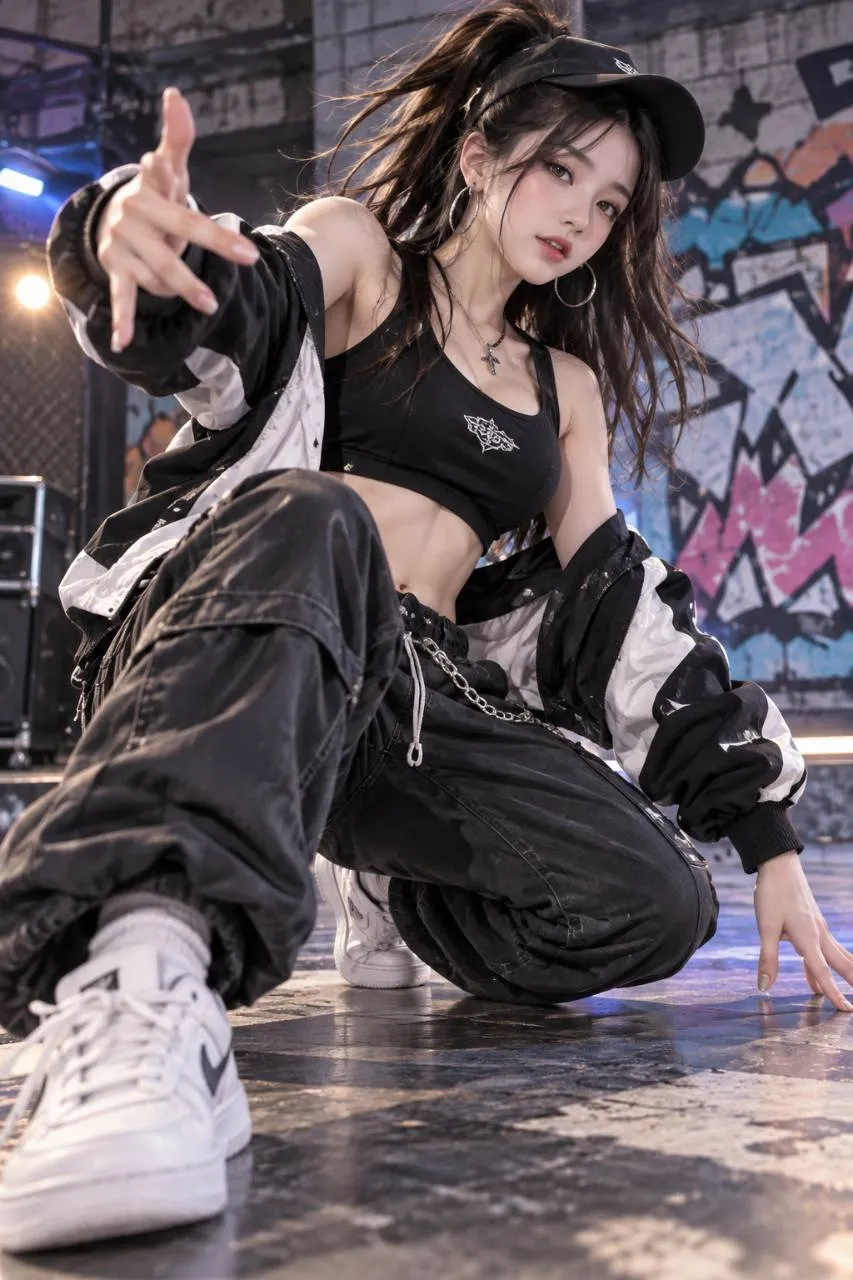
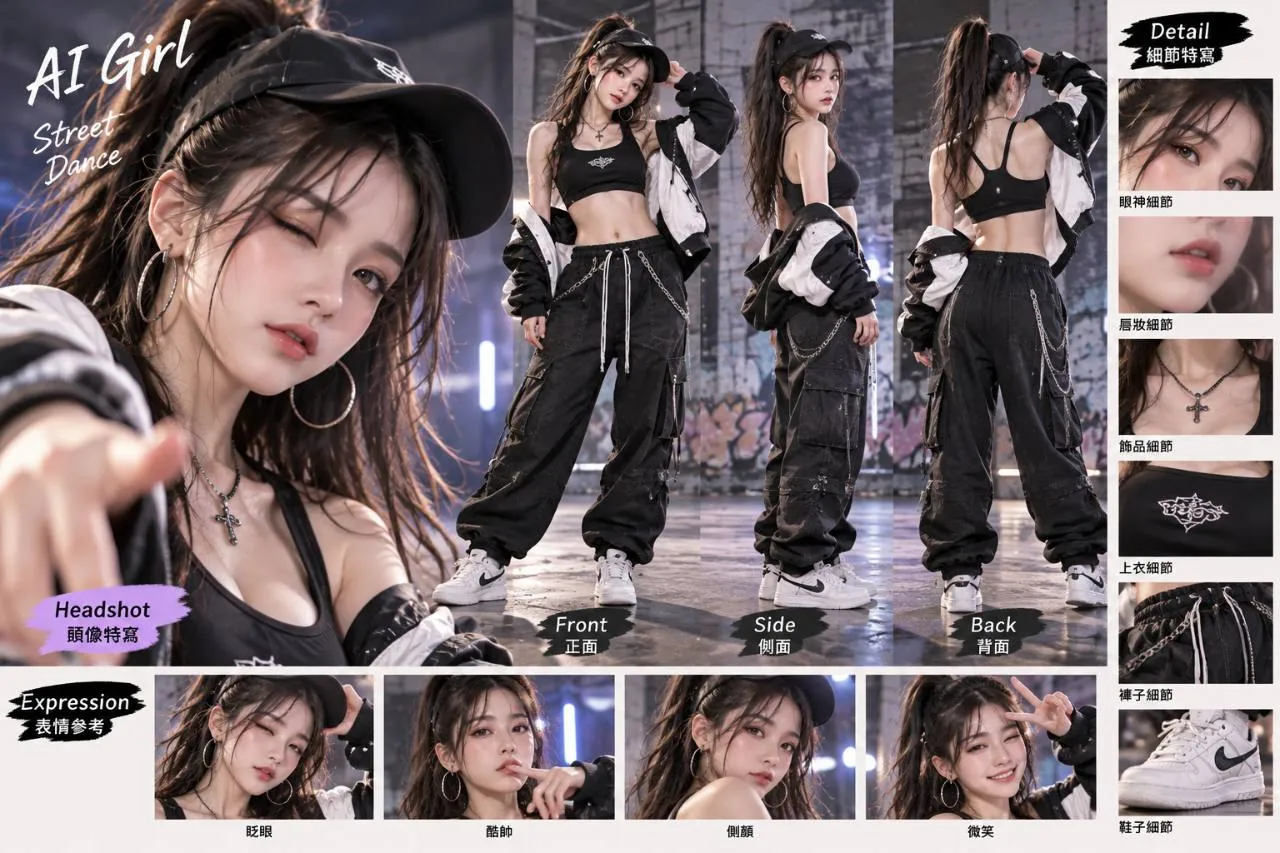
Use the uploaded image only as a reference for the adult dancer's face, hairstyle, body proportions, cap, earrings, necklace, outfit, and shoes. The performer is one adult street dancer with a black high ponytail, black cap, black cropped top, black-and-white jacket, loose black cargo pants, a silver chain, and white sneakers. Keep the same appearance and outfit throughout.

Set the video in a bright, clean white dance studio with a softly reflective floor. Use a polished K-pop MV and fashion-editorial look. Keep the dancer as the visual focus. Use a stable frontal full-body camera, with only a gentle push-in or small lateral move. Keep both feet and shoes visible during footwork. Avoid sudden scene changes and large camera rotations.

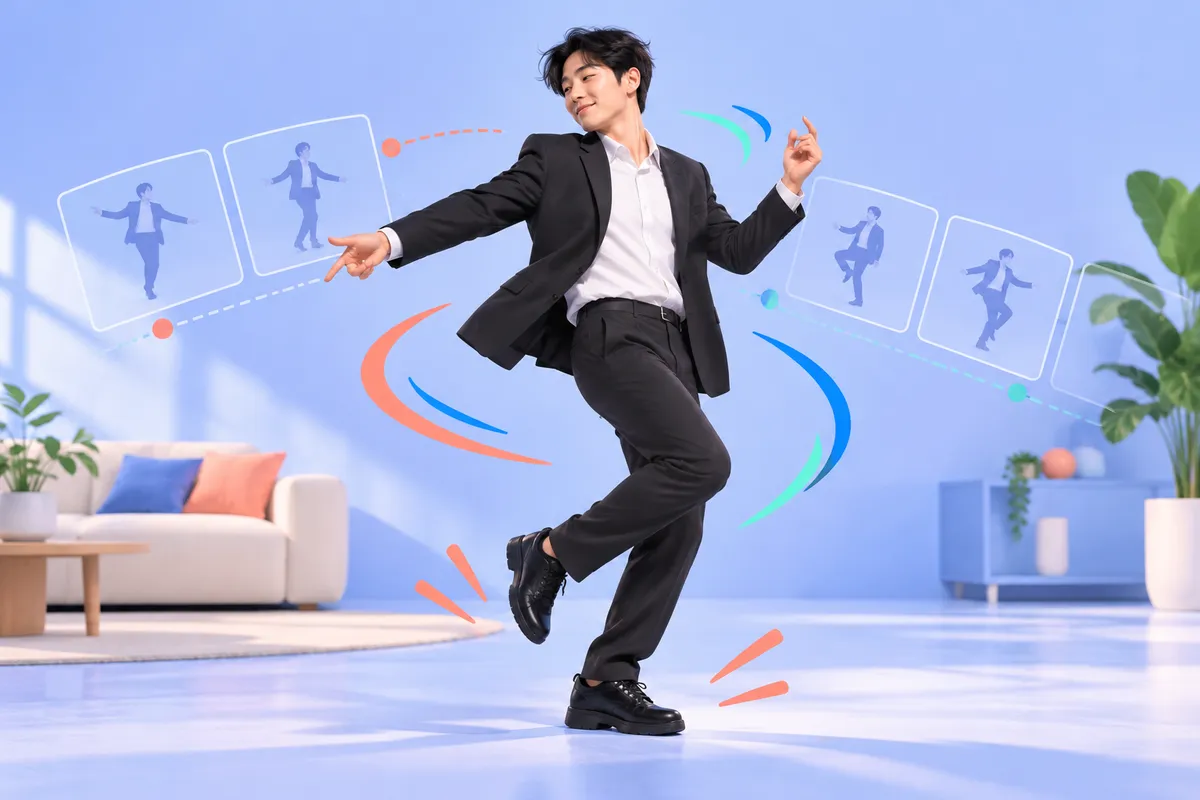
The choreography combines K-pop performance and hip-hop: sharp shoulder hits, arm hits, heel-toe switches, quick foot changes, cross-steps, controlled torso isolations, lateral steps, and one short half-turn. Start dancing in the first second. Show clear weight shifts and connect each move smoothly while gradually building intensity.

Use the short words MOVE, BEAT, and GO with arm-tracking lines, circular impact rings, geometric splits, and beat pulses. When an arm swings, add one brief cyan trail along its direction. When a foot lands firmly, add a circular ripple from the landing point. When the dancer takes a wide step, expand a geometric frame without cropping the shoes. During the half-turn, rotate a ring briefly in the same direction. Show a short word and a pulse only on a clear beat. Keep all graphics behind or around the dancer; keep the face and feet unobstructed. If accurate text is unreliable, prioritize the dancer and composition.

0–2 seconds: Start dancing immediately with shoulder hits, an arm extension, heel-toe switches, and quick foot changes. Add a gentle push-in and a brief MOVE graphic.
2–4 seconds: Cross-step, torso isolation, a lateral arm swing, and a side step. Add an arm trail and show BEAT on one clear accent.
4–6 seconds: Complete a natural half-turn, then continue with short sliding steps and a shoulder hit. Let a ring follow the turn and add one ripple on a firm landing.
6–8 seconds: Use a wide step, quick foot changes, and a strong arm hit. Enlarge GO behind the dancer and briefly expand the geometric frame.
8–10 seconds: Finish with one short sequence of quick footwork and a strong arm hit. Build the graphics gradually, then hold a powerful final pose for the last half-second on a beat, with one clean ripple behind the dancer.

Target an instrumental electronic hip-hop track around 125 BPM, with clear drums, bass, and hi-hats, and no vocals or dialogue. Treat the BPM and beat sync as creative guidance, not frame-accurate timing.

Keep one performer and one location. Preserve natural anatomy, consistent appearance, continuous movement, and a full-body composition. Do not change the outfit, face, or scene. Avoid random particles, excessive flicker, and chaotic camera motion. Prioritize clear movement and visible footwork over extra effects.